Faculty Development and Program Planning
Materials to Support SOR Professional Development for Faculty
These materials and resources are designed for use by teacher preparation program faculty and administrators for auditing their curricula in teaching reading and literacy, professional development of teacher educators, and as stand-alone courses that can be integrated into teacher preparation programs to fill gaps.
Faculty Development
Integrating Reading Foundations: A Tool for College Instructors of Pre‑service Teachers
This tool is designed for college instructors preparing future teachers. It offers structured lessons and activities, grounded in evidence-based recommendations, to build understanding of foundational reading skills and effective literacy instruction for students in kindergarten through third grade.
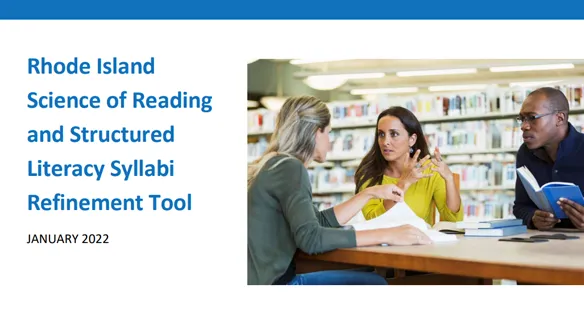
Rhode Island Science of Reading Structured Literacy Syllabi Refinement Tool
This tool guides faculty in evaluating and improving course syllabi. It uses an evidence-based framework to show how essential science of reading and structured literacy elements are covered and where there are gaps to fill.
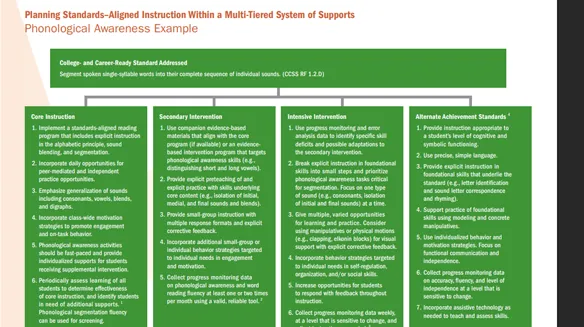
Planning Standards–Aligned Instruction Within a Multi-Tiered System of Supports
This resource provides a a framework to show educators how teachers can support phonological awareness across tiers of instruction.
Materials to support SOR professional development for faculty
These resources outline research-based approaches to early reading instruction, offering frameworks and principles to support effective literacy teaching for K–5 learners.
Courses & Modules
Science of Reading Fundamentals Microcredential
Professional Learning for evidence-based reading instruction for teachers, coaches, district stakeholders to improve literacy outcomes across the U.S.
National Center on Intensive Intervention
A series of self-paced, online learning modules designed to help educators implement intensive, evidence-based interventions for students with significant learning and/or behavior needs. And a teaching approach that involves breaking down complex skills into smaller, manageable steps, modeling the steps, and providing guided practice to help students learn and master new material more effectively.