Assessment & Data Based Decision Making
Assessment of Literacy Knowledge and Skills
Effective instruction requires regular assessment of students’ literacy knowledge and skills. This section of the TeachSOR hub provides teachers-in-training information on assessment methods and tools to evaluate students’ knowledge, skill, and progress.
This resource provides a practical overview of literacy assessment, including why assessments matter and which tools and approaches educators can use. It supports a comprehensive approach to literacy instruction by helping teams screen students, monitor progress, and make informed instructional decisions.
Data Based Decision Making
Data Based Decision Making for Administrators
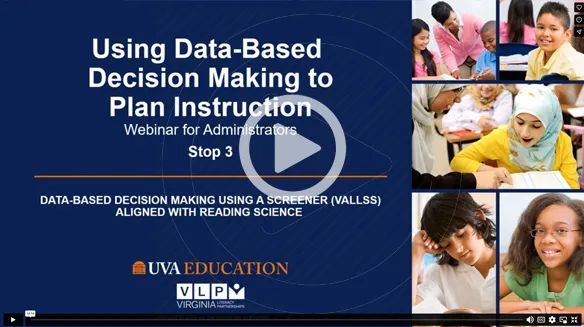
This webinar explains how to use data-based decision making to plan instruction and includes a slide deck detailing the Virginia Language and Literacy Screening System (VALLSS) and its role in assessment and instructional planning.
Using Data To Shape Instruction
This topic explores types of assessments that can be used to gather data and inform instruction. It also includes information on following a data-based decision-making cycle in order to make informed decisions about instruction at the school level and classroom level.
Sample Screeners and Progress Monitoring Tools
The use of “screeners” is highly recommended in comprehensive approaches to literacy instruction. Screeners are brief, grade-appropriate assessments of skills in the areas of literacy development that provide educators with a rapid overall impression of students’ performance to inform instructional programming and groupings.
Virginia Literacy Partnerships: VALLSS
The VALLSS screening system is used with students in Pre-K through 3rd grades to identify students at risk of reading difficulties. These assessments are designed to measure students’ knowledge of important literacy skills and can be used to provide teachers with information to help guide their teaching.
Acadience Reading Pre-K: PELI
The Preschool Early Literacy Indicators (PELI®) is an individually administered assessment of essential skills for early literacy development in children who are 3 to 5 years of age.
Acadience Reading K-6
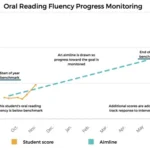
Acadience Reading (previously published under the DIBELS Next® mark) is a screening and progress monitoring assessment used to measure early literacy and reading skills for students in grades K-6.
FastBridge
FastBridge Adaptive Reading (aReading) is a brief, reliable, and valid assessment used for universal screening and monitoring of student growth throughout the year for students in Kindergarten through Grade 12.
DIBELS 8th Edition
DIBELS 8th Edition is a set of brief, standardized measures used to screen and monitor early literacy skills. Subtests such as Letter Naming Fluency (LNF), Phonemic Segmentation Fluency (PSF), and Nonsense Word Fluency (NWF) assess key foundational reading abilities and help identify students at risk for reading difficulties in the early grades.
EasyCBM
EasyCBM provides free reading assessments for progress monitoring. These grade-level measures help educators track student growth in areas like fluency, comprehension, and vocabulary and use that information to guide instruction.
Gates-MacGinitie Reading Tests
The Gates-MacGinitie Reading Tests® (GMRT®), Fourth Edition, are research-validated assessments trusted by educators to accurately identify students’ reading strengths and needs. They help teachers understand diverse reading levels and tailor instruction to support every learner.
Rapid Automatized Naming (RAN)
This details a brief, specialized assessment designed to screen students in kindergarten and first grade for potential reading difficulties, including dyslexia. By measuring how quickly and accurately a child can name a repeated set of familiar objects, letters, or numbers, this tool provides educators with a powerful “early warning” indicator that works alongside other literacy measures to identify students who may need targeted intervention.