Reading Foundations
How do Children Learn to Read: What do Beginning Teachers Need to Know?
Materials provide research that describes the Science of Reading (SOR) and structured literacy programming for students, including knowledge about the development of reading and related skills. This is essential background knowledge and when teachers learn it, their effective implementation of SOR in the classroom increases, as do children’s skills.
Jump to:
Research, Theory & Models of Reading
Models of Reading
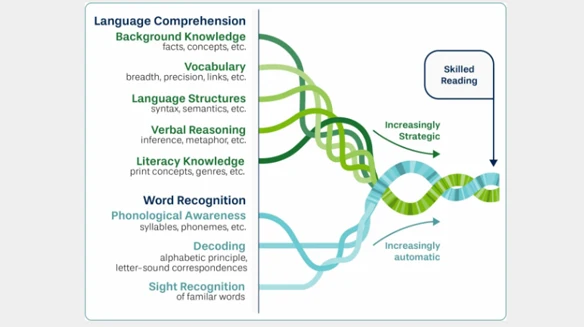
Research has identified core components that contribute to skilled reading. Conceptual models such as the Simple View of Reading (SVR) and Scarborough’s Reading Rope provide research-based frameworks for understanding how word recognition and language comprehension work together to support reading development. These models offer a foundation for exploring additional resources in this section.
• The Simple View of Reading (SVR)
• Scarborough’s Reading Rope
The Reading is Language Model
This introduces the Reading is Language (RIL) model, a theoretical framework developed by OxEd & Assessment that emphasizes oral language as the fundamental building block for all literacy skills. The model argues that early language proficiency is the primary predictor of later success in both word decoding and reading comprehension, advocating for early assessment and targeted intervention to improve long-term educational outcomes.
The Science of Reading Progresses
This article highlights key developments in reading science that build on the Simple View of Reading, emphasizing the additional cognitive and linguistic factors that contribute to successful reading.
Hoover & Tunmer’s Response
Provides a comprehensive, evidence-based roadmap of how children transform from beginning readers into experts. The authors argue for a “balanced and developmentally informed” approach that reconciles long-standing debates by explaining why systematic phonics is essential for “cracking the code,” while also detailing how advanced fluency and deep comprehension require a rich foundation of language, vocabulary, and background knowledge.
Kim’s DIER Model
This argues that while the Simple View of Reading is a useful starting point, it is insufficient for modern instruction because it overlooks the complex, overlapping roles of executive function, self-regulation, and morphological awareness. The authors propose the Active View of Reading model, which provides a more comprehensive framework for educators by mapping out the specific, “active” processes that bridge the gap between basic word recognition and deep language comprehension.
Neuroscience & Reading Development
Typical Reading Development
Learn about the typical stages we see in children as they become readers, from pre-K through high school. Literacy begins with a strong foundation in oral language comprehension and word recognition (decoding).
What We Know About Reading and the Brain
Learning to read involves neurological processes fundamental to understanding how instruction works and is necessary. This brief piece explains the brain connections to literacy skills and teaching.
Addressing Myths & Misconceptions about SOR
Teachers and educators need to be familiar with what SoR is not. Misconceptions about SoR and about literacy development more generally that impede accurate understanding:
The Science of Reading: An Overview
The Science of Reading brings together research on how children learn to read and what effective instruction looks like. This overview highlights key principles and clears up common misconceptions to help educators support every learner.
Science of Reading Myths and Misconceptions
Explore common myths about learning to read and discover research-based practices that lead to more effective and equitable instruction.
The Science of Reading: Defining Guide
The Science of Reading: Defining Guide provides a firm definition of what the science of reading is, what it is not, and how all stakeholders can understand its potential to transform reading instruction.
Reading, Writing and The Early School Years
This series of practice guides provide practicing educators with up-to-date summaries of the scientific evidence for practice and implementation in key areas to promote children’s literacy.
How Words Cast Their Spell
Spelling is an integral part of learning the language, not a matter of memorization.
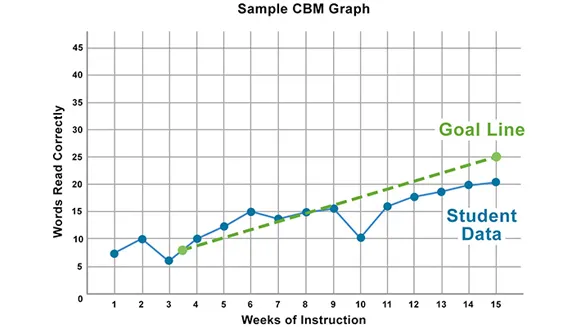
Create a Goal Line: IRIS Center Resource
This resource guides educators through creating a goal line on student graphs, an essential tool for visualizing expected progress and guiding instruction.
Preparing Young Children for School
This introductory piece describes factors that support children’s early success in school, including the role of the family and the importance of early language development and social skills.
Foundational Skills to Support Reading for Understanding in Kindergarten Through 3rd Grade
This piece is helpful for a more in-depth understanding of the components of literacy and how they can be supported over the early grades of school.